When severe weather affects Hawaii, most small business owners have more immediate concerns than their website.
Employees need to be kept safe. Property may need to be secured. Roads can close. Power can disappear. Appointments, tours, deliveries, and reservations may suddenly need to be canceled or changed.
But once those immediate concerns are addressed, another question quickly becomes important:
How do your customers know what is happening?
Hawaii’s recent storms have provided a powerful reminder of how quickly normal business operations can change.
When Hurricane Lowell affected Kauaʻi in September 2026, more than 36,000 Kauaʻi Island Utility Cooperative customers — approximately 90% of the utility’s customers — lost power. Downed trees, utility poles, damaged roads, and other disruptions affected businesses and residents throughout the island.
Just weeks later, Hurricane Nolo passed west of the Hawaiian Islands. On September 28, the National Weather Service in Honolulu was still forecasting increased rain over Kauaʻi and Oʻahu as rain bands associated with the hurricane moved through the western end of the state.
For small businesses, events like these highlight something that is easy to overlook:
Your online presence is not just a marketing tool. It is also a communication tool.
Table of Contents
- Your Website Should Work When Things Aren’t Normal
- During an Emergency, Customers Are Looking for Answers
- Your Website Should Be Your Online Source of Truth
- Don’t Depend on Social Media Alone
- Don’t Forget About Your Google Business Profile
- Hawaii Businesses Face an Extra Communication Challenge
- After the Storm, Tell People You’re Open Again
- Your Physical Location Can Be Offline While Your Website Remains Available
- Create an Online Communication Plan Before You Need One
- A Reliable Online Presence Is About More Than Getting Found
Your Website Should Work for Your Business When Things Aren’t Normal
Most business owners naturally think of a website as a way to attract customers.
People find your business through Google, visit your website, learn about your products or services, and hopefully call, book, request an estimate, or make a purchase.
That is certainly an important job for a website. A properly planned business website should help convert visitors into customers while also giving them a reliable place to find information about your company.
But a good business website should also be useful when things are not going according to plan.
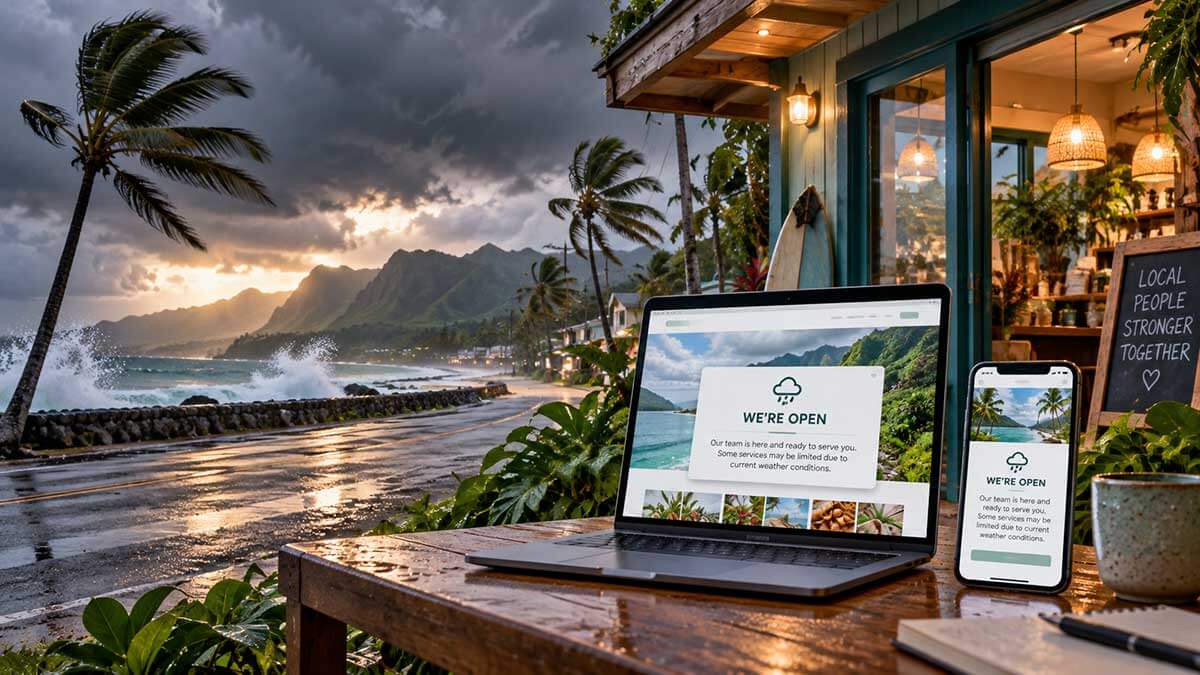
If severe weather forces your business to close temporarily, changes your operating hours, affects appointments, or interrupts service, your website can become one of the fastest ways to communicate accurate information to customers.
A simple notice might say:
Temporarily Closed Due to Storm Conditions
Our location is currently without power and will remain closed today. Existing customers with reservations will be contacted directly. We will post another update here tomorrow morning.
That one message can answer hundreds of questions before customers ever have to call.
During an Emergency, Customers Are Looking for Answers
When a storm or other disruption occurs, customers generally aren’t looking for marketing.
They’re looking for information.
They may want to know:
- Are you open?
- Is my reservation still scheduled?
- Should I still come to my appointment?
- Is your location accessible?
- Are deliveries delayed?
- Are you answering the phone?
- When will you reopen?
For businesses that depend heavily on reservations and appointments, these questions can become particularly important.
Tour companies, restaurants, wedding professionals, vacation-related businesses, contractors, repair companies, healthcare providers, and many other local businesses may already have customers scheduled days or weeks in advance.
Those customers need to know what to do next.
Providing that information online isn’t really marketing at all.
It’s customer service.
Your Website Should Be Your Online Source of Truth
One of the best ways to think about a business website is as your company’s source of truth online.
When circumstances change, your website should contain the most accurate information available about your business.
If your operating hours have changed, say so.
If you’re closed, say so.
If reservations are being rescheduled, explain what customers should expect.
And when you’re open again, make that clear too.
Problems arise when customers receive conflicting information.
Your website says you’re open.
Google says you’re closed.
Facebook hasn’t been updated in three days.
An Instagram post says something different.
Now the customer doesn’t know what to believe.
During an already confusing situation, inconsistent information only creates more confusion.
A better approach is to establish one authoritative source — preferably your own website — and make sure your other online channels support it.
Don’t Depend on Social Media Alone
Facebook and Instagram can be extremely useful for posting quick updates during an emergency.
But they shouldn’t be your only communication method.
Not every customer follows your business on social media.
Even among people who do, there is no guarantee that every follower will see every post.
Some customers may not use social media at all.
Others may simply search your business name on Google to find out whether you’re open.
That is why integrating social media with your website makes more sense than treating either one as a stand-alone communication channel.
Ideally, your communication channels work together:
Your website provides the authoritative information.
Your Google Business Profile provides current operating information to people searching Google or Google Maps.
Social media helps spread updates quickly.
Email or text messaging can communicate directly with customers who already have appointments, reservations, or orders.
No single platform has to do everything.
The important thing is having a plan for how they work together.
Don’t Forget About Your Google Business Profile
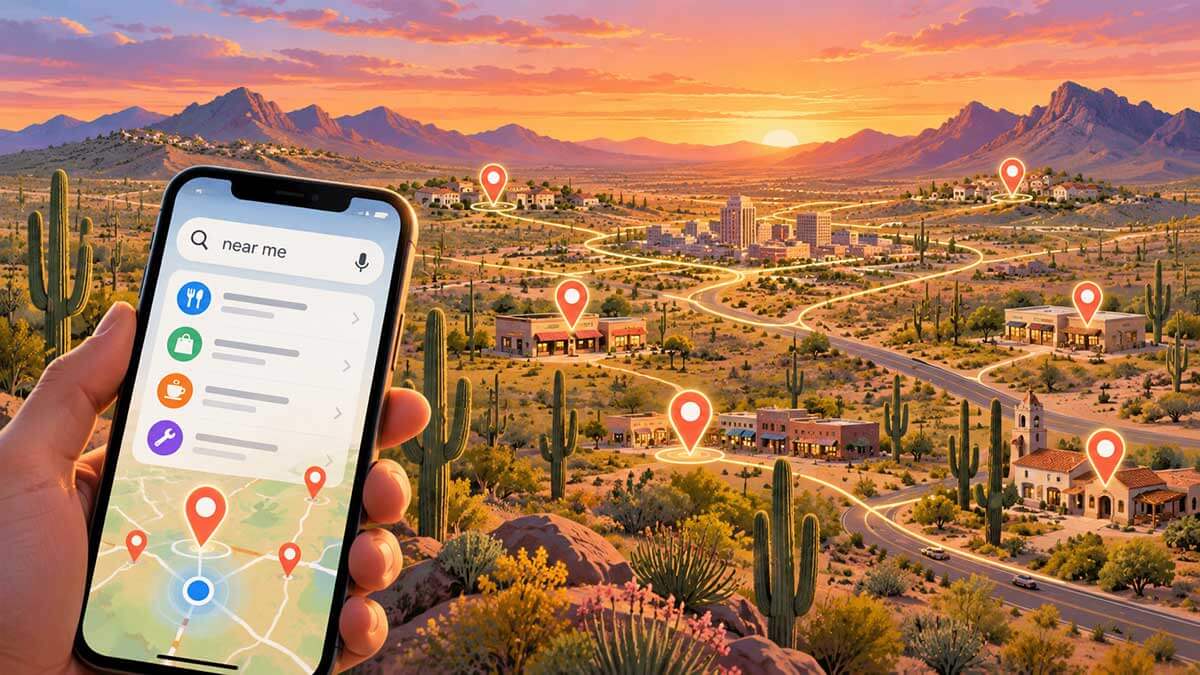
For many local businesses, a customer may encounter their Google Business Profile before ever reaching the website.
Someone searching for your business may immediately see your hours, phone number, location, reviews, website link, and other information directly in Google’s search results or Maps.
That is one reason optimizing and maintaining your Google Business Profile is an important part of your overall online presence.
During a disruption, keeping that information current becomes especially important.
Depending on the circumstances, you may need to update:
- Temporary operating hours
- Special hours
- Temporary closure status
- Phone information
- Website information
- Business updates
Imagine a visitor searching:
“Is this business open today?”
If Google shows outdated hours while your website says you’re closed, you’ve already created uncertainty.
Your Google listing and website should tell the same story.
Hawaii Businesses Face an Extra Communication Challenge
Online communication matters everywhere, but Hawaii businesses face some unique circumstances.
A significant percentage of customers for many local businesses are visitors.
Those visitors may have very little understanding of Hawaii’s geography or local conditions.
Someone on the mainland may hear that a hurricane affected Hawaii and assume that every island experienced the same conditions.
Even visitors already in the state may not understand that weather conditions on Kauaʻi can be very different from conditions on Maui, Oʻahu, or Hawaiʻi Island.
The same can be true within an individual island.
One area may experience flooding or power outages while businesses elsewhere are operating normally.
That makes clear, location-specific information particularly valuable.
Sometimes the message customers need to hear is:
We’re closed.
But sometimes the equally important message is:
We’re open.
After the Storm, Tell People You’re Open Again
This is one of the easiest opportunities for small businesses to overlook.
After a storm, owners are understandably focused on getting back to normal.
There may be cleanup.
Employees need to return.
Equipment has to be checked.
Deliveries may need to restart.
Appointments have to be rescheduled.
But customers may still believe the business is closed.
This can be particularly damaging in visitor-dependent areas.
News coverage showing storm damage can leave potential travelers with the impression that an entire island remains closed long after many businesses have returned to normal operations.
That’s when your online presence becomes part of the recovery process.
Update your website.
Update Google.
Post on social media.
Send an email if appropriate.
Let people know:
We’re open and ready to serve you.
That message can be just as important as the original closure announcement.
It also illustrates why maintaining good search engine visibility matters. When customers search for your business after a disruption, you want them to find accurate, current information from you rather than relying on an old social media post, outdated directory listing, or third-party website.
Your Physical Location Can Be Offline While Your Website Remains Available
A severe storm may interrupt power or communications at your physical location.
That doesn’t necessarily mean your website has to disappear too.
With reliable website hosting, your site may remain available even when your physical business is experiencing an outage, particularly when the hosting infrastructure itself is located outside the affected area.
That gives customers somewhere to look for information while phone lines, power, or normal operations are unavailable.
Of course, a website can’t help very much if nobody can update it.
That’s why business owners should know in advance how important notices will be posted and who is responsible for posting them.
An emergency is not the ideal time to discover that nobody remembers the website password.
Create an Online Communication Plan Before You Need One
A small business doesn’t need a complicated emergency communications department.
But every business should have a basic plan.
Ask yourself:
Where will we publish an important update first?
Who has access to the website?
Who can update our Google Business Profile?
How will we contact customers with existing reservations or appointments?
How will customers know when we’ve reopened?
What happens if the person who normally handles this isn’t available?
Businesses that use ongoing website maintenance and support should also know how to reach the person responsible for making urgent website changes.
Even preparing a few basic messages in advance can help.
Storm Monitoring Notice
We are closely monitoring weather conditions and are currently operating normally. Please check this page for any changes to our schedule.
Temporary Closure Notice
For the safety of our customers and employees, we will be closed today due to severe weather. We will post additional updates here as conditions improve.
Limited Operations Notice
We are open with limited operations today. Response times may be longer than usual. Thank you for your patience.
Reopening Notice
We are happy to announce that we have reopened and resumed normal operations. Thank you for your patience and support.
You may never need to use them.
But if you do, you won’t be writing them in the middle of an emergency.
A Reliable Online Presence Is About More Than Getting Found
There are plenty of good reasons for a small business to have a professional website.
It can help customers discover your business.
It can explain what you do.
It can establish credibility.
It can generate leads, bookings, and sales.
But sometimes its most valuable purpose is much simpler.
It gives your business a reliable place to communicate.
Recent storms affecting Hawaii have shown just how quickly conditions can change. For businesses throughout the islands, especially those depending on visitors and reservations, keeping customers informed can make a meaningful difference.
When everything is running normally, your online presence helps customers find you.
When something goes wrong, it helps them understand what is happening.
And when the storm has passed, it helps tell them you’re open again.
That’s why a strong online presence isn’t just about marketing your business. It’s about making sure your customers can still find accurate information when communication matters most.
Is Your Business Prepared to Communicate Online?
Your website should do more than look good when everything is running smoothly.
It should also give your business a reliable way to communicate when circumstances change.
Shaka Web Design Services helps small businesses establish and maintain a professional online presence through custom website development, hosting, search visibility, and ongoing website support.
If you’re not sure whether your current website is ready when you need to communicate something quickly, request a website consultation and let’s take a look.